
January 1, 2025
Our education systems are failing to meet the needs of a rapidly changing world. Systems designed to solve problems of the past perpetuate inequities, stifle creativity, and fail to prepare learners for the complexity and uncertainty of today and tomorrow. Ten years ago, Manifesto 15 called for bold action to reimagine learning for a changing world. Since then, the rhetoric has grown louder, but very little has changed. Legacy philosophies continue to fail to meet the demands of our present and future.
This document presents a framework, through a set of principles, to address the inertia and complacency that have held learners back. We seek to dismantle outdated paradigms, challenge entrenched power structures, and address the systemic issues that perpetuate inequity, limit potential, and stifle innovation. We aim to inspire the creation of dynamic, inclusive, and learner-centered ecosystems that equip all individuals to thrive as full participants in an interconnected world.
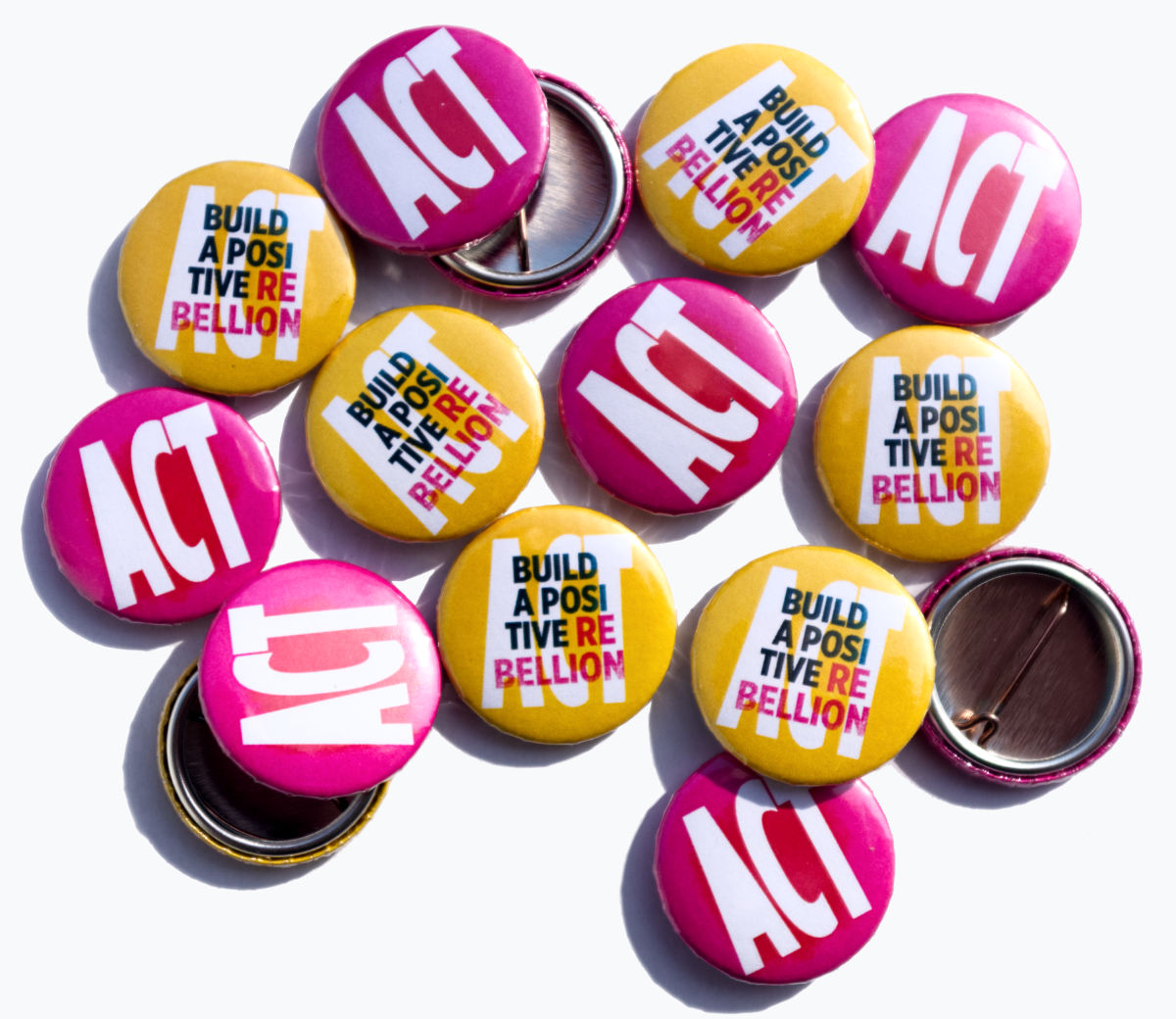
Hope is not enough. Action must replace rhetoric. Waiting for reforms and polite conversations cannot address the urgency of this moment. This document is a call for a positive rebellion. It urges us to collaborate in dismantling outdated paradigms, creating new ones, and co-designing an education system that serves all learners, unlocks human potential, and equips us not only to survive, but thrive, in a world beyond our imagination. This starts by coming together to empower learners at the core.
Our way forward requires courage, creativity, and community. We must reimagine education as a dynamic force that equips every learner to shape a thriving, equitable, and sustainable world.
What we have learned so far
- “The future is already here—it’s just not very evenly distributed” (William Gibson in Gladstone, 1998). The field of education lags behind other industries because it focuses on the past rather than the future. We teach the history of literature but ignore the future of storytelling. We emphasize traditional mathematical concepts but neglect the creation of new mathematics to shape tomorrow. What is labeled as “revolutionary” in education has already occurred in fragmented, localized ways. To realize meaningful change, we must learn from these scattered efforts, share experiences, and take the necessary risks to embrace a forward-looking approach in our practice.
- 1.0 schools cannot teach 3.0, 4.0, 5.0 … kids. In other words, schools designed for the industrial age cannot meet the needs of a digital, interconnected era. We need to redefine and build a clear understanding of what we are educating for, why we do it, and for whom our educational systems serve. Mainstream compulsory schooling is based on an outdated, 19th-century model for creating citizens with the potential to become obedient factory workers and bureaucrats. In the post-industrial and increasingly digital era, this should no longer be the end goal of education. We need to support learners to become innovators, capable of leveraging their own imagination and creativity to realize new outcomes for society. We do this because today’s challenges cannot be solved through old thinking. And we are all co-responsible for creating futures with positive outcomes that benefit all people in the world.
- Kids are people, too. All students must be treated and respected as human beings with recognized, universal human rights and responsibilities. This means students must have an active say in the choices regarding their learning, including how their schools are run, how and when they learn, and all other areas of everyday life. This is inclusion in a real sense. Students of all ages must be afforded liberties to pursue educational opportunities and approaches for learning that are appropriate for them, as long as their decisions do not infringe on the liberties of others to do the same (adapted from EUDEC, 2023).
- Schools must be havens of uncommon safety and extraordinary respect. Social-emotional and relational intelligence must be at the core, beyond test scores and rigid academics, fostering empathy, self-awareness, and constructive conflict resolution. The opportunity to be vulnerable in a safe space allows for genuine, authentic connections with others and oneself. In this way, schools establish the interpersonal foundation learners need to navigate diverse perspectives and thrive in an interconnected world. These intelligences are not optional; they are the cornerstone of personal growth and collective progress.
- Authentic learning comes from freedom, not from being pushed into a predetermined path. The traditional top-down, teacher-student model suppresses curiosity and erodes intrinsic motivation, reducing learning to compliance exercises. Instead, we must adopt flat, collaborative approaches that value peer learning, peer teaching, and distributed responsibility. Educators must create environments where students can decide when and how to take their leaps, knowing that failure is not an endpoint but a natural step in the learning process. Failing is a natural part of learning where we can always try again. In a flat learning environment, the teacher’s role is to help make sure the learner makes a well-balanced decision. Failing is part of the path of learning, but the creation of failures is not.
- Learning together, teaching together. Education thrives when everyone becomes both a teacher and a learner. By breaking free from artificial age silos, schools can evolve into vibrant hubs where children, parents, elders, and community members exchange skills, insights, and creativity as open knowledge and networking ecosystems. Older students mentor younger peers while gaining fresh perspectives, and parents and community leaders bring real-world knowledge, enriched by the curiosity of children. This dynamic, reciprocal process celebrates intergenerational wisdom, strengthens social bonds, and empowers all to shape a meaningful future.
- Learning occurs in ecosystems, not boxes. Rigid schedules and siloed classrooms reduce education to a transactional process, ignoring its lifelong, interwoven nature. Formal schooling should be one strand in a wider tapestry of experiences that involves family, community, workplaces, and digital networks. By blending these contexts, we erase boundaries between formal and informal learning, allowing knowledge and skills to circulate freely. In such environments, students learn to adapt to various roles, work across generations, and embrace insights from unexpected sources. Freed from the confines of boxes, education fuels curiosity and self-confidence, preparing learners to flourish in an ever-evolving world.
- Nirvana is found in the fusion of agency with self-efficacy. When learners and educators achieve both agency (the freedom to shape their paths) and self-efficacy (the belief that they can succeed) education transcends traditional goals and reaches its ultimate purpose: empowering individuals to lead fulfilling, impactful lives. Schools should actively cultivate this balance by blending choice-driven learning with consistent opportunities for learners to build and demonstrate competence. This fusion prepares students for the future by enabling the inspiration and vision necessary to create it.
- Educators are creators, collaborators, and innovators, not cogs in a machine. Reducing them to implementers of legacy methods undermines both learners and the future of education. To address the demands of a dynamic, interconnected world, educators must be valued as individuals with unique needs, aspirations, and creative potential. Transforming education means enabling educators as co-creators, equipping them with trust, tools, and resources to drive innovation. Recognizing educators as professionals and partners fosters thriving learning environments where both teachers and students flourish, inspiring curiosity, adaptability, and resilience.
- Don’t value what we measure; measure what we value. Assessments should empower learners, not instill fear. The obsession with high-stakes testing abets anxiety and reduces education to rote memorization, sidelining critical thinking and problem-solving. The cult of high-stakes testing has become the misguided arbiters of success, spreading a harmful culture of comparison and underperformance anxiety worldwide. This fixation undermines genuine innovation, with promising ideas dismissed due to measurement concerns. Worse, schools produce leaders ill-equipped to interpret data critically. We must eliminate compulsory high-stakes testing and redirect resources toward initiatives that advance authentic learning and meaningful, multidimensional growth.
- Bad use of technology is a symptom, not the problem. Technology is not a solution by itself, but when used thoughtfully, it can unlock new ways of learning and creating. We must move beyond old practices and truly harness technology as a tool for transformation, rather than obsessing over the latest tools while neglecting their potential to drive change. Swapping blackboards for smartboards or books for tablets while clinging to old teaching methods is like building a nuclear plant to power a horse cart: wasteful and ineffective. Yet, nothing has changed, and we still focus tremendous resources on these tools and squander our opportunities to exploit their potential to transform what we learn and how we do it. By recreating practices of the past with technologies, schools focus more on managing hardware and software rather than developing students’ mindware and the purposive use of these tools.
- Learning happens if we attend to it or not. Most learning is “invisible.” It occurs outside formal instruction through informal, serendipitous experiences. It happens through curiosity, experimentation, and unplanned experiences; more like breathing than deliberate effort. Rather than forcing invisible learning into visibility, we should focus on creating environments that trust and nurture its organic flow. This means nurturing workplaces, schools, and communities that value exploration, provide opportunities to seek knowledge, and respect that not all learning needs to be measured or reported. By allowing learning to remain unseen, we preserve its authenticity and permit individuals to grow in ways that are meaningful to them. Trust, not surveillance, is the true driver of innovation and growth.
- Knowledge is constructed from meaning, not management. When we talk about knowledge and innovation, we frequently commingle or confuse the concepts with data and information instead. Too often, we fool ourselves into thinking that we give learners “knowledge” when we are just testing them for the rote recall of information. To be clear: Data are bits and pieces here and there, from which we combine into information. Knowledge is about taking information and creating meaning at a personal level. We innovate when we take action with what we know to create new value. Understanding this difference exposes one of the greatest problems facing school management and teaching: While we are good at managing information, we simply cannot manage the knowledge in students’ heads without degrading it back to information.
- Standardization kills creativity and innovation. One-size-fits-all education turns learners into uniform outputs, measuring success through narrow assessments. By fragmenting knowledge into isolated subjects, it overlooks the complexity of real-world challenges and curbs experimentation and bold thinking. To foster genuine innovation, we must abandon rigid uniformity and adopt adaptive, learner-centered approaches that emphasize open-ended inquiry and interdisciplinary collaboration. Only when students can explore their interests, exchange diverse perspectives, and engage in authentic problem-solving does true creativity flourish.
- Knowledge grows where the boundaries of networks intersect. The emerging pedagogy of this century isn’t carefully planned—it evolves fluidly. Learning unfolds as we traverse and expand networks, connecting individual knowledge to create new understandings. By sharing experiences, we generate social knowledge that enriches collective insight. Education must prioritize equipping individuals with the tools, competencies, and literacies (such as digital fluency, cultural awareness, and network navigation) needed to thrive in these interconnected systems. Through this process, learners contextualize their unique talents and knowledge, empowering them to tackle new challenges with creativity and confidence.
- Degrees are obsolete by design. Many static degree programs, designed for fixed fields with clear endpoints, are outdated or obsolete before students even finish their first year. Traditional diplomas fail to keep up with accelerating change and often do not capture the depth of real-world skills and achievements. A concerted shift toward a new, decentralized system is needed that values creativity, problem-solving, and real impact over time spent in a classroom. Learners need dynamic recognition systems that adapt with them, rewarding growth and contributions that reflect the ever-changing demands of the world.
- Any education system that tolerates inequities is complicit in injustice. Systems designed to perpetuate inequality fail everyone. Schools must move beyond token acknowledgments of diversity to dismantle systemic barriers. Curricula should amplify marginalized voices and ensure that every learner is genuinely seen, heard, and valued. Equity and inclusion are not optional add-ons—they are the foundation of a fair and sustainable education system.
- Acts of global citizenship transform personal experience into planetary impact. Rooted in local contexts and meaningful engagement with diverse communities, it bridges individual perspectives with global challenges. Education must equip learners to tackle these challenges through cross-cultural empathy, ethical responsibility, and collaborative problem-solving. This requires planetary-focused literacies—frameworks that connect local actions to global solutions while respecting individual and collective rights. By aligning personal agency with shared tools, education empowers learners to act locally and globally, shaping sustainable and equitable futures.
- The future belongs to nerds, geeks, makers, dreamers, and knowmads. While not everybody will or should become an entrepreneur, those who do not develop entrepreneurial skills are at a great disadvantage. Our education systems should focus on the development of entreprenerds: individuals who leverage their specialized knowledge to dream, create, make, explore, learn, and promote entrepreneurial, cultural, or social endeavors, taking risks and enjoying the process as much as the final outcome, without fearing the potential failures or mistakes that the journey includes.
- Reality is not optional. Ignoring our shared reality is a collapse into chaos. Weaponized postmodernism, where facts are twisted and accountability evaded, threatens the foundation of education and society itself. Shared realities are not optional; without them, critical thinking fails, trust evaporates, and collaboration becomes impossible. Education must confront distortion head-on, rooting itself in empirical evidence while unleashing our imaginations to solve new challenges. To build a sustainable future, learners must be equipped to challenge distortions, reject evasion of accountability, and navigate complexity with intellectual courage.
- An education that ignores the planet is an education without a future. With climate catastrophe looming, any curriculum that neglects environmental stewardship is both deficient and irresponsible. Education must actively shape students’ futures and the world around them. Learners should not passively study the environment; they must be empowered as co-creators of solutions and active guardians of the planet. By enabling students with future-ready skills and agency to address grand challenges, and integrating planetary-focused literacies into a dynamic, flexible learning process, we foster innovation and a personal connection to sustainability that inspires lasting impact.
- We can and must build cultures of trust in our schools and communities. As long as our education systems continue to be based on fear, anxiety, and distrust, challenges to all of the above will persist. If educators are to build a collective capacity to transform education, we need engaged communities, and we also need to engage with the communities we serve. This requires a new theory of action, centered on trust, where students, schools, governments, businesses, parents, and communities may engage in collaborative initiatives to co-create new education futures.
- Break the rules, but understand why clearly first. Our school systems are built on cultures of obedience, enforced compliance, and complacency. The creativity of students, staff, and our institutions is inherently stultified. It is easier to be told what to think than to think for ourselves. Openly asking questions and building a metacognitive awareness of what we have created and what we would like to do about it can best cure this institutionalized malaise. Only then can we engineer justified breaks from the system that challenge the status quo and have the potential to create real impact.
- Activism is a space where unlearning thrives. Whether through non-violent civil disobedience, street protests, artistic demonstrations, or performative resistance, activism challenges the status quo and rebuilds from the ground up. It teaches resilience, agency, and the courage to confront broken systems, including education itself. Educators must embrace activism as a core learning tool, transforming passive learners into active participants in shaping the world.
- Question everything. Start with this manifesto. Blind acceptance breeds complacency. As co-learners, we must provide safe spaces to critically evaluate all ideas, including the ones presented here. By contributing to a culture of critical thinking and open dialogue, the development of one’s self-awareness is encouraged and individuals are enabled to contribute toward a continuous evolution of how we teach and learn.
The challenges in education persist because they threaten entrenched power and disrupt the status quo. For centuries, truths that challenge privilege—whether heliocentrism, the validity of evolutionary biology, or the reality of human-driven climate change—have faced resistance. Education, similarly constrained by antiquated priorities, demands not more awareness, but the courage to dismantle barriers, reject complacency, and build systems that serve every learner and community.
No one can do this alone. A movement for learning futures demands a coalition of educators, learners, families, policymakers, and communities. By uniting our unique strengths, we can dismantle outdated systems, redesign curricula, and create environments where equity, creativity, and curiosity thrive. Each action we take counts, whether reimagining how we teach, fostering cultures of trust within schools, or advocating for policy change that centers learning as a lifelong right.
Together, we can create an education system that empowers every learner to thrive in an unpredictable world. It’s time to act boldly, collectively, and with purpose.
The future is here. What we build today matters.
January 1, 2025
Education systems are failing in a fast-changing world. Many schools still prepare people for routine jobs and fixed answers. That leaves many learners unready for instability, new tools, and shared problems. It also keeps unfairness alive. Some students get more freedom, more trust, and more chances than others. It also weakens creativity. Learners are pushed to repeat answers instead of making new ideas. Ten years ago, Manifesto 15 called for bold action. It asked us to rethink learning for a changing world. Since then, the language has grown stronger. The results have stayed small. Old ideas about education still fail our present and our future.
This document offers a framework built from principles. It addresses the inertia and complacency that hold learners back. Inertia means schools keep old habits because change feels hard. Complacency means adults accept weak systems because they feel normal. Outdated models need to be broken. Fixed power must be challenged. That power lives in rules, rankings, and decisions learners do not control. System failures must be faced directly. Those failures keep inequality in place, limit choices, and block new ideas. The goal is dynamic, inclusive, learner-centered learning ecosystems. Learning ecosystems connect learning across school, work, home, and community. They should help all people take part fully in an interconnected world.
Hope will not solve this. Talk alone will not solve it either. This document calls for a positive rebellion. Positive rebellion means rejecting harmful practices and building better ones. We need both parts. Refusal without rebuilding is not enough. Rebuilding without resistance is not enough either. We need new systems with learners at the center. Those systems should serve every learner. They should expand what people can imagine, try, and become. They should help us thrive, not merely survive. This starts when people act together.
The way forward needs courage, creativity, and community. Education should become a force that helps people shape a fair future. That future must also be sustainable.
What we have learned so far
- “The future is already here. It is just not very evenly distributed.” Education still trails other fields. It keeps its eyes on the past when it should look ahead. We teach literary history, but we rarely ask how stories will change next. We teach inherited mathematics, but we rarely ask what new mathematics tomorrow may need. Many so-called revolutionary ideas already exist in scattered local work. Those places deserve careful study. Their lessons should be shared. Practice must accept the risks of looking ahead.
- 1.0 schools cannot teach 3.0, 4.0, 5.0... kids. Industrial-age schools do not fit a digital and connected era. Education needs clearer answers about its purpose, why it exists, and whom it should serve. Mainstream compulsory schooling still follows an old nineteenth-century pattern. That pattern trained obedient workers and bureaucrats. That goal should be over. Learners need support to become innovators. Their imagination and creativity should help create new outcomes for society. Old thinking cannot solve today’s problems. Everyone shares responsibility for futures that benefit all people.
- Kids are people, too. Students are human beings with recognized rights and responsibilities. They deserve that respect every day. They should have a real say in learning decisions. That includes how schools are run, how they learn, when they learn, and everyday life beyond class. This is real inclusion. Learners of every age need freedom to follow paths that fit them. Their freedom ends where another person’s freedom begins.
- Schools must be havens of uncommon safety and extraordinary respect. Schools should feel safe and show deep respect. Social, emotional, and relational intelligence must be central. Test scores cannot replace those things. Rigid academics cannot replace them either. Schools should build empathy, self-awareness, and conflict resolution that repairs relationships. Safe places let people be vulnerable. Vulnerability allows honest connection with self and others. That foundation helps learners face different perspectives. It helps them live in an interconnected world. These abilities are not optional. They support personal growth and shared progress.
- Authentic learning comes from freedom, not from being pushed into a predetermined path. When the model puts the teacher above the student, curiosity shrinks. It weakens inner motivation. It turns learning into obedience drills. Flatter and more collaborative approaches work better. They value peer learning, peer teaching, and distributed responsibility. Educators should build spaces with real choice. Students should decide when to leap and how to leap. They need to know failure is not the end. Failure is one normal step in learning. People can try again after failure. Teachers should help learners make balanced decisions. Failure belongs in learning. Designed failure does not.
- Learning together, teaching together. Education works best when everyone teaches and learns. Schools should stop separating people by strict age bands. Lively hubs work better. Children, parents, elders, and communities should share skills and ideas there. Older students can mentor younger peers. They also gain new perspective in return. Parents and community leaders bring real-world knowledge. Children bring curiosity. That curiosity deepens what others know. This exchange honors wisdom across generations. It strengthens social bonds. It gives everyone more power to shape a meaningful future.
- Learning occurs in ecosystems, not boxes. Rigid schedules and siloed classrooms make learning transactional. They hide how learning connects across a lifetime. Formal schooling should be one strand in a bigger web. That web includes family, community, workplaces, and digital networks. When these contexts connect, formal and informal learning move together. Knowledge can travel more freely. Skills can travel too. In these spaces, students learn to adapt. They learn to work across generations. They learn from unexpected sources. When learning escapes boxes, curiosity grows. Self-confidence grows too. Learners become readier for a changing world.
- Nirvana is found in the fusion of agency with self-efficacy. Agency means choosing your path, giving it purpose, and acting on it. Self-efficacy means believing you can succeed. Learners need both. Educators need both too. When people build both, education reaches a deeper purpose. It helps people live meaningful lives and have real influence. Schools should grow this balance on purpose. Learner choice should pair with steady chances to build competence. Students also need chances to show competence. This fusion prepares students for the future. It gives them vision and the drive to create that future.
- Educators are creators, collaborators, and innovators, not cogs in a machine. Learners suffer when educators only deliver old methods. Education itself suffers too. Educators are people with needs, goals, and creative power. They should be treated that way. Transforming education means trusting educators as co-creators. It also means giving them tools, resources, and room to innovate. When educators are treated as professionals and partners, schools improve. Teachers grow. Students grow too. Curiosity, adaptability, and resilience grow there as well.
- Don’t value what we measure. Measure what we value. Assessment should strengthen learners. It should not frighten them. High-stakes testing feeds anxiety. It reduces education to memorizing answers. It pushes critical thinking aside. It pushes problem-solving aside too. This testing culture acts like a false judge of success. It spreads harmful comparison. It spreads fear about falling behind. It also blocks innovation. Promising ideas get rejected when they are hard to measure. Schools also produce leaders who misread data. Compulsory high-stakes testing should end. Resources should move toward authentic learning and meaningful growth.
- Bad use of technology is a symptom, not the problem. Technology alone does not solve anything. Thoughtful use can open new ways to learn and create. Schools often buy devices without changing teaching. Then the same old lessons stay in place. Replacing blackboards with smartboards changes little. Replacing books with tablets changes little too. That is still old teaching. It is like building a nuclear plant for a horse cart. It wastes money. It wastes possibility too. Schools still pour huge resources into tools. They still miss the chance to change what we learn. They still miss the chance to change how we learn. Instead, they manage hardware and software. They neglect students’ mindware. Mindware means the inner tools people use to think and learn. They also neglect purposive use. Purposive use means using tools with a clear learning purpose.
- Learning happens if we attend to it or not. Most learning stays invisible. Much of it happens outside formal teaching. It grows through curiosity, experiments, and unplanned experience. Often it is closer to breathing than planning. We should not force all invisible learning into view. We should build places that trust its natural flow. Workplaces should value exploration. Schools should value exploration. Communities should value exploration. They should create chances to seek knowledge. They should respect learning that is never measured or reported. Unseen learning can stay authentic. People can grow in ways that matter to them. Trust, not surveillance, is the true driver of innovation and growth.
- Knowledge grows from meaning. Management should support that process, not replace it. People often mix up data, information, and knowledge. Schools do this too. We may think we give learners knowledge. Often we only test recall. Data are small pieces. We combine them into information. Knowledge appears when a person makes meaning from information. Innovation begins when people act on what they know. Then they create new value. This difference matters. Schools can manage information. They can support knowledge-building, but they cannot do the meaning-making inside students’ minds. Attempts to replace that process reduce knowledge back to information.
- Standardization kills creativity and innovation. One-size-fits-all education produces uniform outputs. It judges success through narrow assessments. It also splits knowledge into separate subjects. That hides the complexity of real life. It limits experimentation. It limits bold thinking too. Real innovation needs another approach. Rigid uniformity has to go. Adaptive and learner-centered approaches work better. Open inquiry should matter there. Work across disciplines should matter too. Creativity grows when students explore interests, exchange different views, and solve real problems.
- Knowledge grows where the boundaries of networks intersect. This century’s pedagogy does not arrive as a finished plan. It changes as people connect. Learning grows when we move through networks and expand them. One person’s knowledge meets another person’s knowledge. New understanding grows from that meeting. Shared experience creates social knowledge. Social knowledge strengthens collective insight. Education should help people build needed tools, competencies, and literacies. Those literacies include digital fluency, cultural awareness, and network navigation. Then learners can place their talents in context. Then they can meet new challenges with confidence and creativity.
- Degrees are obsolete by design. Many degree programs stay fixed in place. They are built for fixed fields and clear end points. That design makes them age badly. Many are outdated before students finish one year. Traditional diplomas cannot keep pace with rapid change. They also miss the depth of real-world skill and achievement. A serious move toward decentralization is needed. New recognition systems should value creativity, problem-solving, and real impact over seat time. Learners need flexible recognition systems. Those systems should change with them. They should reward growth and contribution in a changing world.
- Any education system that tolerates inequities is complicit in injustice. Systems built to preserve inequality fail everyone. Schools must go beyond symbolic talk about diversity. They must dismantle systemic barriers. Curricula should amplify marginalized voices. Every learner should be seen clearly, heard clearly, and valued clearly. Equity and inclusion are not optional extras. They are the base of a fair and sustainable education system.
- Acts of global citizenship transform personal experience into planetary impact. Global citizenship starts in local life. It also grows through meaningful contact with diverse communities. It connects personal perspective with global challenge. Education should prepare learners for those challenges. It should build cross-cultural empathy, ethical responsibility, and collaborative problem-solving. This requires planetary-focused literacies. These literacies connect local action to global solutions. They also respect individual and collective rights. When education aligns personal agency with shared tools, learners can act locally and globally. They can help shape fair and sustainable futures.
- The future belongs to nerds, geeks, makers, dreamers, and knowmads. Knowmads are people who learn, adapt, and create in many situations. Not everyone will become an entrepreneur. Not everyone should. People without entrepreneurial skills still face a major disadvantage. Education should help develop entreprenerds. They use special knowledge to dream, create, make, explore, and learn. They also lead entrepreneurial, cultural, or social work. They take risks. They value process as much as outcome. They do not let mistakes or failure stop them.
- Reality is not optional. Ignoring shared reality leads toward chaos. Weaponized postmodernism twists facts. It also dodges accountability. That threatens education and society. Shared realities are necessary. Without them, critical thinking fails. Trust disappears. Collaboration becomes impossible. Education should confront distortion directly. It should stay grounded in evidence. It should also use imagination to solve new problems. Learners need tools to challenge distortion, reject escape from accountability, and face complexity with intellectual courage.
- An education that ignores the planet is an education without a future. Climate catastrophe is getting closer. Any curriculum that ignores environmental stewardship is deficient. It is irresponsible too. Education should actively shape students’ futures and the world around them. Learners should not only study the environment. They should become co-creators of solutions and active guardians of the planet. Education should build future-ready skills. It should build agency for major challenges too. It should include planetary-focused literacies in flexible learning processes. That is how innovation connects with personal commitment to sustainability.
- We can and must build cultures of trust in our schools and communities. These problems will continue if education stays rooted in fear and distrust. Educators need the ability to transform education together. That requires engaged communities. It also requires engaging the communities we serve. We need a new theory of action. Trust should sit at its center. Then students, schools, governments, businesses, parents, and communities can work together. They can co-create new education futures.
- Break the rules, but understand why clearly first. School systems are built on obedience, forced compliance, and complacency. That weakens creativity in students, staff, and institutions. It is easier to be told what to think. Thinking for ourselves is harder. People should ask questions openly. People also need metacognitive awareness. Metacognitive awareness means examining what we built and what should happen next. This addresses institutional malaise. It means schools stop running on dull habit. Only then can people make justified breaks from the system. Those breaks can challenge the status quo. They can also create real impact.
- Activism is a space where unlearning thrives. Activism takes many forms. It can be non-violent civil disobedience. It can be street protest. It can be artistic demonstration. It can be performative resistance. In every form, it challenges the status quo. It also rebuilds from the ground up. It teaches resilience, agency, and courage. It helps people confront broken systems, including education itself. Educators should treat activism as a core learning tool. It can turn passive learners into active people who shape the world.
- Question everything. Start with this manifesto. Blind acceptance breeds complacency. Co-learners need safe spaces to test ideas critically. That includes the ideas in this document. Critical thinking and open dialogue build self-awareness. They also help people shape the continuing evolution of teaching and learning.
These education problems persist because they threaten entrenched power. They also disrupt the status quo. For centuries, privileged systems have resisted difficult truths. Heliocentrism faced resistance. Evolutionary biology faced resistance. Human-caused climate change still faces resistance. Education is trapped by old priorities in the same way. Awareness alone will not fix that. Courage is needed to remove barriers, reject complacency, and build systems serving every learner and community.
No one can do this alone. Learning futures need educators, learners, families, policymakers, and communities together. Our strengths differ, but they should be combined. Then outdated systems can be dismantled. Then curricula can be redesigned. Then places can be built where equity, creativity, and curiosity thrive. Every action matters. Reimagining teaching matters. Building trust in schools matters. Policy change matters too. Learning should stand at the center as a lifelong right.
Together, people can build an education system for an unpredictable world. That system should help every learner thrive. Now is the time to act boldly, collectively, and with purpose.
The future is here. What we build today matters.
Where do we go from here?
Build a Positive Rebellion: Create New Education Futures expands the ideas behind Manifesto 25 through essays, provocations, and practical reflections that explore each principle in greater depth.
Available in English and Spanish at PositiveRebellion.org.
Explore the bookInitial signatories

We are:
John Moravec (principal author, USA), Gustavo Andrade (Mexico), Chris Bagley (UK), Constanze Beyer (Germany), Paola Boccia (Argentina/Germany), Edwin De Bree (Netherlands), Vivian Breucker (Germany), Alexandra Castro Ferrada (USA), María Mercedes Civarolo (Spain/Argentina), Cristóbal Cobo (Chile), Antonio L. Delgado Pérez (USA), Claudia Dikmans (Germany), Albus Duc Hoang (Vietnam), Kristina House (Canada), Silvia Enriquez (Argentina), Martine Eyzenga (Netherlands), Tomas C. Ferber (Germany), Richard Fransham (Canada), Gustavo Garcia Lutz (Uruguay), Peter Gray (USA), Christel Hartkamp (Netherlands), Pekka Ihanainen (Finland), Marcel Kampman (Netherlands), Bob Kartous (Czech Republic), Kateřina Kolínková (Czech Republic), Kamila Koutná (Czech Republic), Florian Kretzschmar (Germany), Nicola Kriesel (Germany), Luis R. Lara (Argentina), Diego Leal (Colombia), Carlos Lizárraga Celaya (USA), María Cristina Martínez-Bravo (Ecuador), Juraj Mazák (Slovakia), Alejandra Mendoza Garza (Mexico), Farid Mokhtar Noriega (Spain), María Mercedes Moravec (USA), Daniel Navarrete (Colombia), Varlei Xavier Nogueira (Brazil), Alejandro Núñez Urquijo (Colombia), Hugo Pardo Kuklinski (Argentina/Spain), Alejandro Pisanty (Mexico), Lucas Potenza (Argentina), Noemi Pulido (Argentina), Luis Napoleón Quintanilla (El Salvador), Dinant Roode (Netherlands), Javier José Simon (Argentina), Alison Snieckus (USA), Max Ugaz (Peru), Paloma Valdivia Vizarreta (Spain), David Vidal (Spain), Evangelos Vlachakis (Greece), Tim Weinert (Germany), Monika Wernz (Germany), and Alex Wiedemann (Germany).